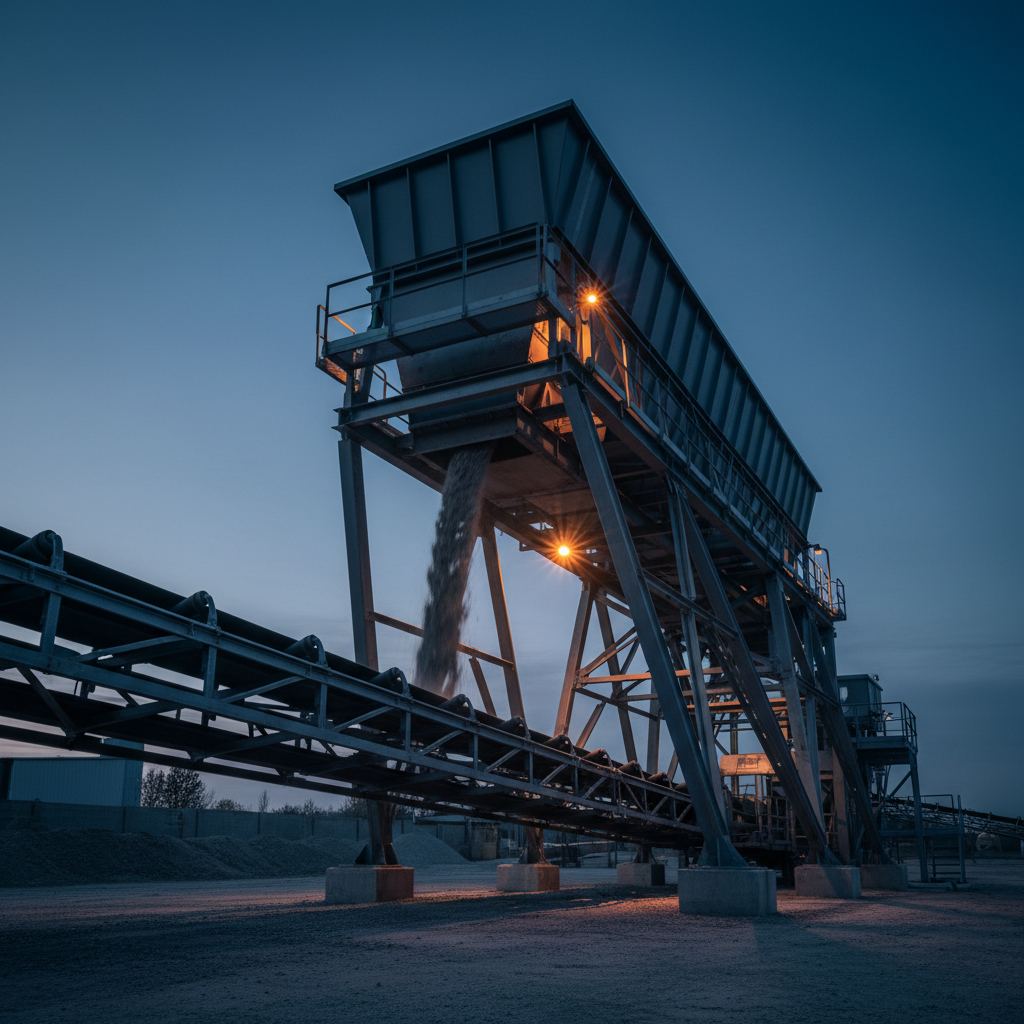
Elevated steel surge bin discharging onto a conveyor at a bulk handling plant
Absorb the Surge. Feed It Steady. Keep the Line Moving.

Surge Bins for Every Bulk Handling Line

Heavy-duty surge bins for mining and aggregate producers, grain and feed handlers, food and ingredient processors, and plastics and chemical compounders. The surge bin is the shock absorber between intermittent supply and steady demand, and its flow design decides whether the plant runs on rhythm or on luck.

  • Elevated, portable, live-bottom and sanitary designs
  • Mass-flow geometry, liners and outlets sized to the material
  • Belt, vibratory, screw and rotary-valve discharge feeders
  • Level monitoring, dust control and load cell options

The fundamentals

What a surge bin does, and why every line eventually needs one

Bulk material rarely arrives the way a process wants to receive it. Trucks dump twenty tons in under a minute and then the ramp is empty for ten. A loader feeds in bucket-sized pulses. A crusher's output rises and falls with what the excavator finds. Downstream of all this sits equipment that performs best, or only performs at all, on a steady, controlled feed: conveyors sized to a rate, screens, dryers, mixers, packaging lines.

A surge bin sits between the two and decouples supply from demand. It swallows the burst at whatever rate the burst arrives, holds a working buffer, and meters material out through a feeder at the rate the process asks for. Upstream equipment stops waiting on downstream equipment and vice versa; trucks cycle faster, the crusher stays choked, and the plant feed stops flickering between flood and famine.

The value shows up as throughput. Without surge capacity, the whole line runs at the speed of its most irregular moment. With it, each stage runs at its own best rate, and short upstream interruptions, a late truck, a loader refueling, pass invisibly while the bin rides through on its buffer.

The working rule

A surge bin is a flow machine, not a storage tank. Every design decision, capacity, cone, outlet, liner, feeder, exists to keep material moving through it at a controlled rate. If material can hang up inside, the bin does not buffer the line; it becomes the line's most expensive interruption.

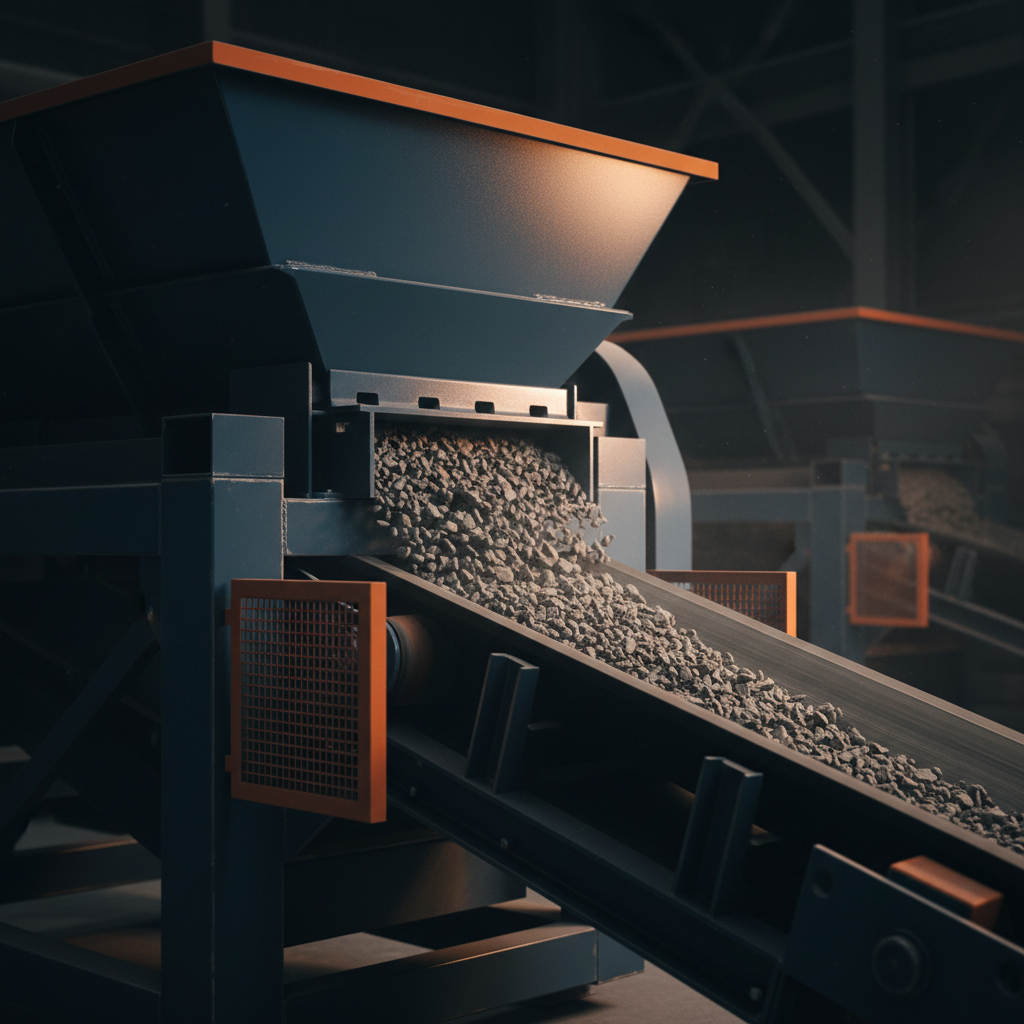
Belt feeder metering material from the outlet of a steel surge bin onto a conveyor
Receiving section
A grizzly, dump grate or open top sized for how material arrives: truck tailgate, loader bucket, conveyor discharge or crusher output.
Body & cone
The buffer volume and the converging section whose angle, finish and outlet size decide whether material mass-flows or hangs up.
Discharge feeder
Belt, vibratory pan, screw or rotary valve under the outlet, controlling the rate the bin releases material to the process.
Level & controls
High and low level switches at minimum, continuous radar where rates are paced, and load cells where inventory by weight matters.

The families

Types of surge bin

Every surge bin answers the same three questions differently: how does material get in, how does the bin get material back out at a controlled rate, and does the vessel stay put or move with the operation. Those answers define the families below.

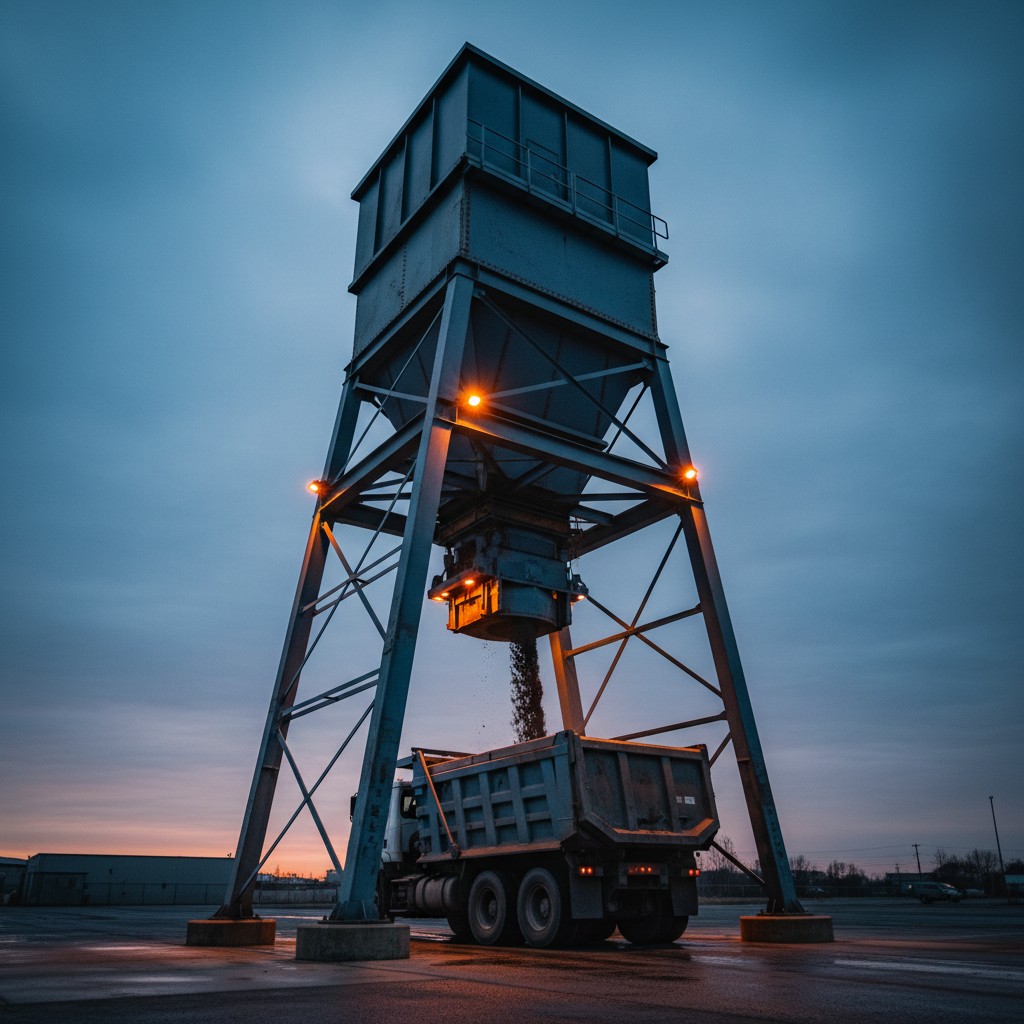
Elevated steel surge bin on structural legs discharging into a truck below

Elevated gravity-discharge bins

The loadout and transfer workhorse

  • A steel bin on structural legs with clearance below for trucks, railcars or a conveyor, discharging by gravity through a gate or feeder.
  • Fills continuously from a conveyor or bucket elevator, then loads out in fast, discrete drafts; the classic overhead truck-loadout arrangement.
  • Sized and skirted for the vehicle or belt beneath, with the structure taking full live load plus wind and surge.
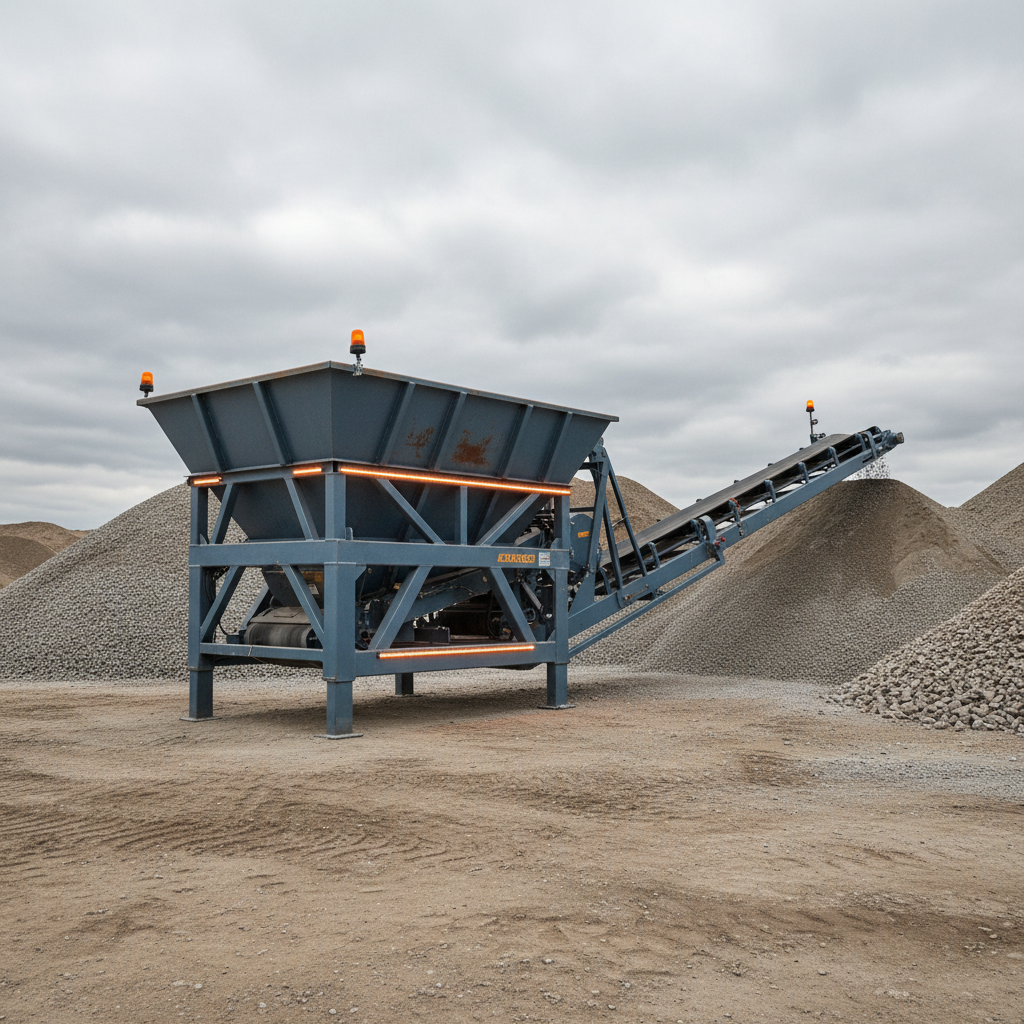
Portable wheeled surge bin with integrated conveyor at an aggregate operation

Portable & track-mounted bins

Surge capacity that moves with the job

  • Wheeled or tracked chassis with an integrated dump grate, feeder and discharge conveyor; set up in hours, tow to the next site when the spread moves.
  • The standard answer for contract crushing, pit-portable plants and frac sand transloading, where the operation itself relocates.
  • Capacity trades against road-legal dimensions, so portable units lean on fast cycling rather than large buffers.
Live-bottom bin with multiple discharge screws under a wide hopper outlet

Live-bottom bins

Flow for materials that refuse to

  • Multiple screws or a moving floor span a wide, slotted outlet, actively drawing material across the full cross-section instead of waiting for gravity.
  • The design of record for cohesive, fibrous, stringy and compacting materials: wet cake, biomass, wood waste, sludges and sticky ores.
  • Costs more per ton of capacity and earns it back by making marginal materials flow on schedule.
Polished stainless steel sanitary surge bin in a food processing plant

Sanitary & process bins

Buffering inside clean processes

  • 304 or 316 stainless, continuous ground welds, polished contact surfaces and geometry that sheds product, built to be cleaned as often as filled.
  • Buffers between receiving, milling, blending and packaging in food, dairy, pet food, nutraceutical and chemical plants.
  • Often paired with rotary valves and pneumatic conveying, with venting and containment designed into the vessel.

Surge bin, surge hopper, buffer bin

One idea, several names

The industry uses several names for the buffer vessel in a bulk line. Surge hopper and surge bin are used interchangeably, with "hopper" leaning toward smaller vessels. Buffer bin is the process-industry term for the same role, and dump hopper or truck unloader names the receiving-duty version with a grizzly on top.

The distinctions matter less than the duty. Describe the material, how it arrives, the rate the process needs and whether the unit must move, and any competent supplier will know exactly what is being asked for, whatever the label on the drawing says.

Reading the drawing

The design factors that actually matter

A surge bin quotation carries a page of numbers. A handful decide whether material moves through the bin on schedule for the next twenty years. Here is what each one governs, and the trap that comes with it.

Key surge bin design factors, what each one governs, and what to watch for
Design factorWhat it governsWhat to watch for
Live capacity & surge cycleHow large a burst the bin absorbs and how long the process rides through an upstream gap.Size from the real surge cycle: largest delivery, longest gap, downstream rate. Bulk density varies with moisture and aeration, so size on the lightest condition the material shows up in.
Flow pattern (mass vs funnel)Whether all material moves when any discharges, or a core empties while wall material lingers.Funnel flow is fine for clean, free-flowing, non-degrading material and cheaper to build. Cohesive, moist or segregating materials want mass flow, and pretending otherwise is how bins grow hammer dents.
Cone angle & wall frictionWhether material slides along the converging walls or stalls against them.The angle that works depends on the material against that wall finish, not on habit. Liners such as UHMW or polished stainless can buy flow that extra steepness alone cannot.
Outlet sizeWhether material can arch over the opening, and how fast the bin can possibly discharge.The outlet must beat the material's arching dimension with margin. A beautiful bin over an undersized outlet bridges on the first humid week, and no flow aid fully rescues it.
Discharge feeder matchHow the controlled rate is actually produced, and whether the outlet is drawn evenly.The feeder must take material across the entire outlet. A belt feeder that pulls only from the back half quietly converts mass flow into funnel flow, whatever the cone was designed to do.
Materials & linersShell life and wall friction: carbon steel for general duty, AR plate or replaceable liners for abrasion, stainless for washdown and corrosives.Impact zones under dump grates and at fill points wear first; a replaceable liner there costs little at build time and a shutdown later.
Structure & supportsThe legs, skirt or chassis carrying full live load, plus wind, seismic, surge and vehicle impact where trucks pass beneath.Loads are dynamic: a truck dump is an impact, not a gentle fill. Clearances for the vehicles and conveyors below are as much a design input as the tonnage.
Venting & dust controlWhere displaced air goes on every fill, and what it carries with it.An enclosed bin without a properly sized vent breathes dust from every opening it has. Combustible dusts bring code requirements for venting and equipment ratings that must be designed in, not bolted on.

Design for the material, not the average

Flow properties are measured, not guessed. The same limestone that pours in July can bridge in November at two percent more moisture. Bins that run for decades were designed against the material's worst realistic condition, with the outlet, cone and liner chosen from measured wall friction and cohesion.

The feeder is half the bin

A surge bin without a properly matched feeder is a funnel with opinions. Rate control, even outlet draw, clean shutoff and restart under a full head of material all live in the feeder selection, and most flow complaints blamed on the bin are settled underneath it.

Match the bin to the duty

Choosing the right surge bin for the job

Start from how material arrives and what the process needs, not from the catalog. Each scenario below names the configuration that usually wins and the reason it wins.

Truck receiving

Dump hopper + feeder

A ground-level or drive-over dump hopper with a grizzly swallows a full tailgate dump in one lift, then a belt or vibratory feeder meters it onto the takeaway conveyor. Truck turnaround time, not average tonnage, sizes the hopper.

Crusher circuits

Elevated surge bin ahead of the mill or screen

Surge capacity between crushing stages keeps the downstream stage choke-fed through the upstream stage's swings. Heavy shells, AR liners at impact points, and structure rated for surge loading are the price of living beside a crusher.

Overhead loadout

Elevated gravity bin

The plant fills the bin continuously; trucks or railcars pull under and load in minutes through a gate or loading spout. Live capacity covers the largest vehicle plus the fill rate, and clearance and skirting are designed around the actual fleet.

Mobile crushing spreads

Portable surge bin

A track- or wheel-mounted bin with integrated feeder follows the crusher between sites, decoupling loader cycles from the plant. Setup time and road-legal dimensions drive the choice more than raw capacity.

Poor-flowing materials

Live-bottom bin

Wet, fibrous, sticky or compacting materials get multiple screws or a moving floor across a wide outlet, drawing flow the material would never provide by gravity. The extra cost is the cost of the material, not the bin.

In-process buffering

Process or sanitary surge bin

Between milling, blending, drying and packaging, a buffer bin lets each stage run at its own rate and absorb short stoppages. Stainless construction, clean geometry and proper venting follow the product and the cleaning regime.

If the line starves, look at the whole cycle first

A surge bin that keeps running empty or overflowing is usually sized or paced wrong for the real delivery cycle, not broken. Log how material actually arrives across a week, including the worst day, and compare it with the downstream draw before modifying steel.

Aggregate plant with surge bins, conveyors and structural steel against the sky

Around the bin

Integrating a surge bin into the line

Feeders and takeaway

The feeder sets the controlled rate; the takeaway conveyor must accept it with margin. Belt feeders for heavy and coarse duty, vibratory pans for clean metering of free-flowing material, screws for fines and sealed transfer, rotary valves into pneumatic lines.

Level monitoring and pacing

High and low switches protect the extremes; continuous radar level lets the control system pace upstream feed and downstream draw so the bin rides mid-range. A surge bin run permanently full or permanently empty is buffering nothing.

Dust control and venting

Every fill displaces air. Bin vents sized for the displacement, pickup points at transfer chutes, and skirts or curtains at dump grates keep fines in the process. Combustible dusts bring code-driven venting and equipment rating requirements.

Load cells and inventory

Mounting the bin on load cells adds live inventory by weight, catches drift a level sensor misses in irregular vessels, and supports loadout and blending by weight. The structure and connections must then be designed to let the cells read cleanly.

Access and maintenance

Poke holes, access doors, ladder and platform access to vents and sensors, and replaceable liners at wear points are cheap on the drawing and expensive after commissioning. Assume someone will one day need to see inside, safely, with the bin locked out.

Where they earn their keep

Applications across industry

The same surge bin idea serves four very different operations. What changes is which design factors dominate and how hard the equipment is used.

Quarry operation with crushers, surge bins and radial conveyors

Mining & aggregates

Dump hoppers at receiving, surge bins between crushing and screening stages, and overhead loadout bins at the end of the line. Impact, abrasion and outdoor exposure set the agenda: AR liners, heavy structure, and capacity that keeps crushers choke-fed through the pit's irregular rhythm.

Grain facility with steel bins, bucket elevators and conveyor gantries

Grain & feed handling

Surge capacity above truck and railcar loadout, buffers between elevator legs and processing, and receiving hoppers built for harvest-season bursts. Gentle handling protects the grain, and combustible-dust codes govern venting, housekeeping and equipment ratings throughout.

Stainless steel processing equipment in a bright food production facility

Food & ingredient processing

Sanitary buffer bins between receiving, milling, blending and packaging let each stage run at its own rate under a cleaning regime that would destroy ordinary equipment. Polished stainless, shedding geometry and designed-in venting keep product moving and audits calm.

Plastics & chemical compounding

Surge hoppers buffer resin, regrind and additives between conveying, blending and extrusion, often feeding rotary valves and pneumatic lines. Sealed construction, static control and clean changeovers matter, because the buffer touches every product the line runs.

Common questions

Surge bin FAQ

What is a surge bin?

A surge bin is a buffer vessel placed between two stages of a bulk handling line that run at different rhythms. Upstream, material arrives in bursts: a truck dumps twenty-plus tons in a minute, a loader cycles bucket by bucket, a crusher's output swings with the feed. Downstream, the process wants a steady, controlled rate. The surge bin absorbs the bursts and meters material out evenly, so neither side has to wait for the other. It is the shock absorber of the line.

Are surge bin, surge hopper and buffer bin the same thing?

For practical purposes, yes. 'Surge bin' and 'surge hopper' are used interchangeably across aggregates, grain and processing; 'buffer bin' or 'buffer hopper' shows up more in process industries, and 'dump hopper' or 'truck unloader' often names the same vessel when its main job is receiving. Suppliers sometimes reserve 'hopper' for smaller vessels and 'bin' for larger ones, but there is no standard cutoff. Describe the duty, the material and the capacity, and the terminology sorts itself out.

How is a surge bin different from a storage silo?

Duty cycle. A storage silo holds inventory: material sits for hours, days or months, and capacity is measured in what the plant needs to store. A surge bin holds flow: material passes through continuously and residence time is minutes, with capacity sized to ride through the mismatch between supply bursts and steady demand. Because material turns over constantly, a surge bin can tolerate flow geometry a long-term silo could not, but it also cannot hide poor flow design, since any hang-up starves the line immediately.

How big should a surge bin be?

Size it to the surge, not to a round number. Work out the largest realistic burst the bin must swallow, such as a full truck dump or the crusher's output during a downstream pause, plus the ride-through the downstream process needs while upstream supply is interrupted, such as the gap between trucks. The live capacity should cover both with margin, using the material's lightest bulk density. Oversizing wastes structure and height; undersizing turns every hiccup upstream into downtime downstream.

Mass flow or funnel flow: which does a surge bin need?

Mass flow means all material moves whenever any discharges, first in first out, with no dead zones. Funnel flow means a core empties down the middle while material at the walls lingers. Free-flowing, non-degrading materials such as clean aggregate often run happily in funnel-flow bins, which are shorter and cheaper. Cohesive, moist, degradable or segregating materials usually justify mass flow, achieved with steeper cones, low-friction liners and properly sized outlets. The material's flow properties, not habit, should make the call.

How do you stop bridging and ratholing in a surge bin?

Design first, devices second. Bridging (material arching over the outlet) and ratholing (a stable pipe emptying down the core) are prevented by an outlet larger than the material's arching dimension, a cone steep and smooth enough for flow along the walls, and liners that cut wall friction. Flow aids such as vibrators, air pads and fluidizing nozzles help stubborn materials but cannot rescue a geometry that is wrong, and a vibrator on a bridging bin can compact the arch harder. If a bin needs constant hammer-rash to run, the outlet and cone are telling you something.

What discharge equipment goes under a surge bin?

A gate holds material back; a feeder controls the rate, and most surge bins need the feeder. Belt feeders handle heavy, coarse, abrasive duty and wide slotted outlets. Vibratory pan feeders meter free-flowing material cleanly and stop dead when power stops. Screw feeders suit fine and cohesive materials and sealed transfer. Rotary valves feed pneumatic conveying lines. The feeder must be matched to the outlet so it draws material across the whole opening, otherwise it quietly converts a mass-flow bin into a funnel-flow one.

How is the level in a surge bin monitored?

Usually with a high-level and low-level point switch at minimum: the high switch stops the feed before overfill, the low switch warns before the bin runs empty and the line starves. Rotary paddles, vibrating forks and capacitance probes are the common point sensors. Continuous level, from radar or ultrasonic sensors, lets the control system pace upstream and downstream rates instead of just reacting at the extremes. Mounting load cells under the bin adds inventory by weight, which no level sensor can match for accuracy in an irregular vessel.

Do surge bins need dust control?

Any bin receiving dusty material displaces a bin's worth of air every time it fills, and that air leaves through whatever opening it finds, carrying fines with it. Enclosed surge bins get bin vents (passive socks or self-cleaning filter vents) sized for the displacement airflow, and truck-dump hoppers get skirts, curtains or pickup points tied into plant dust collection. In grain and other combustible-dust duties this is a safety requirement, not housekeeping, and the venting and equipment ratings must follow the codes that apply to the site.

Portable or stationary: when does a portable surge bin make sense?

Portable surge bins, wheeled or track-mounted, earn their keep wherever the operation itself moves: aggregate crushing spreads that relocate between pits, frac sand transloading, and contract crushing that sets up on a customer's site. They arrive with integrated feeders and conveyors and set up in hours. Stationary bins win on capacity, height options and cost per ton for a plant that stays put. Many fixed plants still buy a portable unit as flexible insurance for receiving, blending or bypassing a down conveyor.

Get a Quote

Tell us about the material and the line

Send the basics and we will point you in the right direction: the material and its bulk density, how it arrives and how fast, the rate the process needs, and whether the duty is portable, outdoor, washdown or dust-rated.

Specifying a surge bin

Working out live capacity, flow geometry, outlet and discharge feeder for the material and surge cycle you actually run.

Line fit & integration

Confirming how the bin pairs with feeders, conveyors, level sensing, dust control and the plant control system.

Upgrades & problem bins

Fixing bridging, ratholing and starved-line problems on an existing bin, or adding surge capacity to a line that never had it.

We use what you submit to respond to your enquiry, which can include sharing it with suppliers who can quote your request. See our privacy notice.